11 December 2025
LETS Newsletter No 20
Newsletter No.20 December 2025
Committee News December

Seasons Greetings to you all.
What another big year for LETS. For a fully volunteer organisation we have managed to achieve a lot. Networking, events, projects, presentations, advocacy, attending conferences, meetings, submissions, newsletters and just trying to keep up with the fast moving world of renewable energy so that we are all abreast of what’s happening.
At our last meeting we learned that Masters student Joe Beck from Europe will be assisting LETS for a four month project early in the year. This is thanks to our association with Dr Hamish Avery from the University of Canterbury. Joe will study a scenario for Lyttelton assuming that all residents have solar and batteries plus EV’s. He’ll assess what can be achieved with retaining energy in Lyttelton, what can be reduced consumption wise and what are the shading effects due to location. It will be great to have some real life data about what could actually be achieved with renewable energy in Lyttelton.
Here is a link to the minutes from our last meeting on November 24th
https://drive.google.com/file/d/13ekc0BjSbTxf9dqFH9iHEI2r0GBHwyMR/view?usp=drive_link
Your committee are all taking a well earned break now. There will be no meetings in December. We will start the New Year with a committee meeting on Monday January 26th. Enjoy your summer holidays.
Wendy, Dana, Greg, Juliet, Tony, Margarita, Raymond and Sam.
New Community Energy Partnership
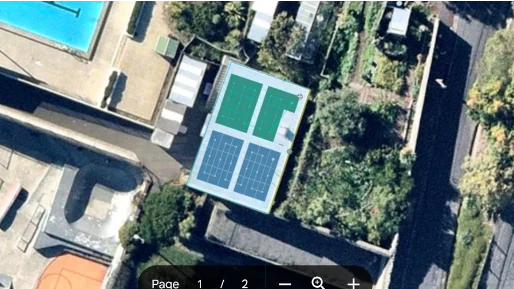
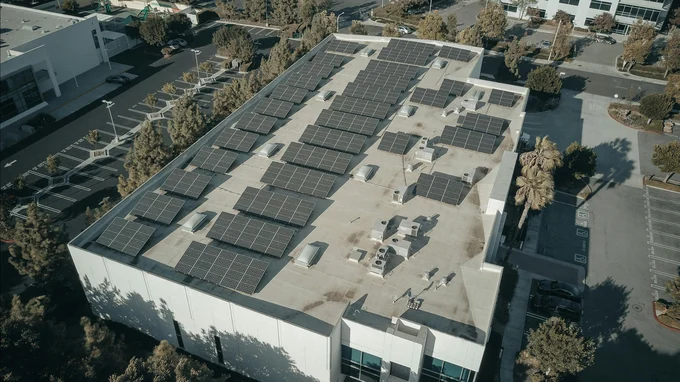
Solar Panels for Project Lyttelton.
LETS and Project Lyttelton have now formally entered into a community energy partnership. This was signed off by the Project Lyttelton Board on November 13th.
LETS is excited to be able to pilot our community energy ideas at this site. The first stage of the project will be installing 15 solar panels and an inverter. These have been kindly donated to our organisation by committee member Raymond Dun. Work will be able to begin when a lease has been formalised for the roof space between LETS and the Christchurch City Council who own the building. The Community Board was briefed on this project on Dec 8th and staff are currently working on the lease with an expectation that the lease will be approved early in the new year.
We envisage an energy monitoring system will also be installed and over time further solar panels will be added as well as a battery. In the longer term we see the pool also being linked to this system and maybe an EV charger onsite. The site has great potential as it already forms part of a community hub.
It’s our expectation that members of our community will also be able to participate in some of the installation process where appropriate and we hope to hold workshops detailing the ins and outs of the system. Additionally we think we will have a community dashboard so that as you walk past you can see how much power the building is generating and other features of the system.
The benefits for Project Lyttelton include a 50/50 profit sharing arrangement with LETS. LETS envisage that the building will generate considerably more power than meets the needs of the building that we can sell back to the energy market. We want to experiment on how we can maximise this revenue stream for the benefit of the community. In Project Lyttelton’s case this will mean a new revenue source that did not exist before plus a more energy resilient building in the long run. For LETS it offers the space to tweak community energy ideas plus the source of more funding to expand this system or create new systems on other sites.
The LETS team leads for this project are Sam Kivi and Raymond Dun who both have extensive experience in the renewable energy field.
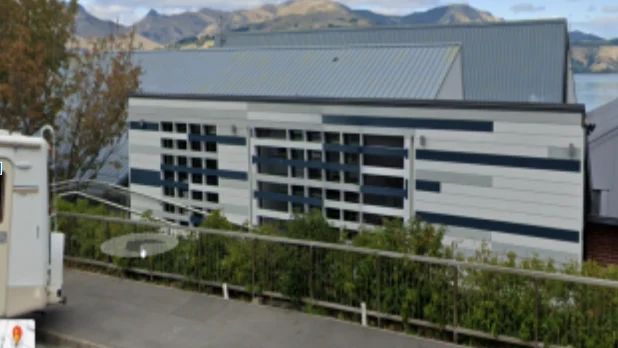
Lyttelton Recreation Centre
Our project to make a resilient community renewable energy hub at this site is taking much longer than LETS imagined. Funding for solar panels and a battery has been difficult to secure because we are seeking to install a system on a Christchurch City Council building.
At the Community Board Meeting on Monday December 8th LETS suggested to the Board that in order to move forward with this Christchurch City Council needs to apply for EECA Resilience Funding and /or approve a line item in the 26/27 Annual Plan for funding for Resilient Community Emergency Hubs in Lyttelton, Diamond Harbour and Governors Bay.
Submissions Electricity Authority
Maximising the Benefits from Local Generation
LETS and 115 other individuals and organisations submitted to the Electricity Authority on this topic. Many submitters were in favour of the export limit for Distributed Generation be increased from 5kW per phase to 10kW per phase. Wasting this energy source was a key reason cited to increase the limit.
“*An overwhelming majority of submitters (more than 85%) support moving to a default 10 kW export limit for customers connecting under a streamlined, 10 day connection pathway. This includes a handful of EDBs, the Electricity Engineers’ Association and Electricity Retailers’ and Generators’ Association of New Zealand.*” Rewiring Aotearoa.
**https://www.rewiring.nz/news/running-the-ruler-over-the-latest-ea-submissions**
Interestingly Orion our local Electricity Distribution Business has not come out in full support of this recommendation. They would prefer flexible export limits and have justified their case on the basis of the following argument.
Here is an excerpt from their submission.
*“Orion supports Vector’s submission on flexible export limits. We believe a strong focus on flexible export limits will yield the greatest benefits for customers and the system as a whole. The Authority's proposed changes will codify static limits, likely slowing the implementation of dynamic limits in New Zealand and reducing the benefits outlined in this consultation. Dynamic exports provide significant*
*benefits and should be prioritised by the industry, including the Authority, other regulators and EDBs.*
*Some benefits include:*
*i. Fair access to network capacity: The current proposal by the Authority will allow first movers to export at 10kW until all headroom on the LV circuit is used, resulting in lagging export connections getting 0kW export limits. Dynamic exports will allow first- and last- movers to be treated the same by enabling dynamic allocation of exports based on real-time network conditions.*
*ii. Reduced cross-subsidisation:As mentioned above, the current position of the Authority will result in lagging export connections having 0kW export limits. 0kW export limits will put pressure on EDBs to upgrade LV circuits to support higher exports. The beneficiaries of upgraded networks for export are SSDG owners. But under Part 6, EDBs are unable to recover the upgrade costs associated with supporting more exports from SSDG owners. This will force load customers to pay for upgrades to enable exports. Additionally, SSDG customers, on average, import less electricity than customers without distributed generation (DG). Dynamic export limits allow more export capacity to be connected to the network, reducing the need for expensive network upgrades that load customers will have to pay for disproportionately.*
*iii. Maximise opportunities for DG to participate in the electricity system: Home batteries and vehicle-to-grid chargers will provide significant benefits for the electricity system. The Authority's current proposals will constrain the benefits of DERs with controllable exports by imposing a static limit. The static limit will typically be set based on peak export times,usually the middle of summer on low-load days. Customers with batteries that can support the network by exporting energy during high load times would only be able to export up to this static limit. Dynamic limits would allow exports up to the fuse capacity per phase during high-load times, while constraining exports during low-load, high-export times.*
*Dynamic limits, therefore, allow networks and the system to derive greater benefits from home batteries and other DG that can export at peak times. The Authority's recent changes to ensure distributors reward exports at peak times will mean customers are fairly compensated for this benefit. Benefits from the wholesale electricity market will also be greater for battery customers due to dynamic limits, which allow greater exports during price spike events, compared to static limits. Overall, dynamic limits will allow the system and customers to gain much larger benefits from DERs with controllable exports,supporting lower electricity prices, less network build and more intermittent renewable generation.*
*iv. Higher export limits: As alluded to in the above points, dynamic export limits would allow less conservative and higher export limits to be set. Orion and other EDBs could set export limits at the customer's fuse size per phase (~14kW). Three-phase residential customers could therefore export up to ~42kW, significantly more than the Authority's current proposed default of 10kW per ICP, with dynamic export customers only constrained at peak export and low import times. In Appendix B, we have diagrammed draft processes to increase export limits quickly to the fuse limit while EDBs build capability for dynamic exports.”*
While Orion raises some valid points, with such a small uptake of home solar as a gesture of goodwill it would be good to see them approve the new static limit in the short term like some other EDB’s have. This might encourage a few more residents to install larger solar systems and ensure the ones who already have that excess power is actually going back into the grid. In the mean time, we would support Orion to keep pushing for flexible exports limits in the longer term.
The final determination on increasing the static limit from 5kW to 10kW will be made by the Electricity Authority.

This is the final article on interesting things that we all learnt from attending this conference in October.
Toast Electric is an energy retailer in New Zealand that is a Not for Profit provider. They don’t operate in all areas of the country but do offer services in Christchurch. The interesting thing about this energy retailer is that all profit earned goes to support households experiencing energy poverty. If you are a customer of this entity you are guaranteed that the surplus from money you spend with Toast goes to help people in need.

In some ways this business is operating just the way LETS envisages operating in our community. Using large roof spaces to provide solar energy for the tenants whilst selling the surplus energy to local households/community organisations. This company works with schools, businesses and sporting clubs to utilise the large roofs they have to generate as much power as they can locally and then share it with others.

There was also a very interesting presentation from Tammy Tauroa, Co-Chair Ngati Kuri Trust Board
*“I found the presentations about regional resilience by the Ngati Kuri Trust Board enlightening showing papakainga developments in the upper Northland region as an example of what community energy can look like, with solar arrays taking up about a residential section sized parcel of land being integrated into residential subdivisions and marae”. Tony Ussher LETS Committee Member*

Te Puna Auaha Trust Board
Dave Evans
JD Rayner
Interesting Articles for the Month.
Interesting Articles shared in November /December
- New Zealand's Gas Supply Crunch: A foretaste of the Global Reality the IEA Is Warning Us About re Oil Supply? https://energyandresilience.substack.com/p/new-zealands-gas-supply-crunch-a?r=2rkqg&utm_medium=ios&triedRedirect=true
##
- Power Station An interesting film about trying to power a whole street with renewable energy. https://www.robhopkins.net/2025/08/27/review-of-power-station/
##
- Divergence. The NZ capacity conundrum in an Election Year.
https://newzealandenergy.substack.com/p/divergence?utm_source=share&utm_medium=android&r=4tc2ow&triedRedirect=true
Things you might like a say on …
Orion’s Load Growth Map Survey
https://www.oriongroup.co.nz/your-energy-future/load-growth-map
**E**lectrification Loans for Ratepayers
https://www.rewiring.nz/ras-letter
**N**Z Household and Energy Survey
https://www.econergy.earth/energysurvey/survey.php?ref=complete
Dates for your Diary
Events coming up:
Jan 26th - LETS Committee meeting 7pm
Late Jan - Solar House Walking Tour
Feb 18th - Guest Speaker Jenny Sahng Rewiring Aotearoa
Membership
If you would like to join LETS and haven’t yet, here is a link to our membership application https://www.lets.org.nz/files/Membership%20Application.pdf
It’s very affordable, only $5 and you’ll be helping to shape the future of Community Energy in Aoteraoa. Donations are also gratefully accepted and are tax deductible. Thank you.

All members are welcome to sign up to our LETS Whats App Group. In this group we share networking opportunities and informative articles/podcasts. If you are interested please text Wendy 021 0476144.
Facebook Lyttelton Energy Transition Society -LETS
For links to our web page and email please click on the links at the bottom of the newsletter.
Do you have any news or events energy related that you’d like included in this monthly broadcast? Please email Wendy communityenergylytt@gmail.com
If you're reading this online and want it delivered to your inbox, click on the 'Subscribe' link in the top LH of this newsletter (if you're reading it on a screen), subscribe here, or email me at communityenergylytt@gmail.com